

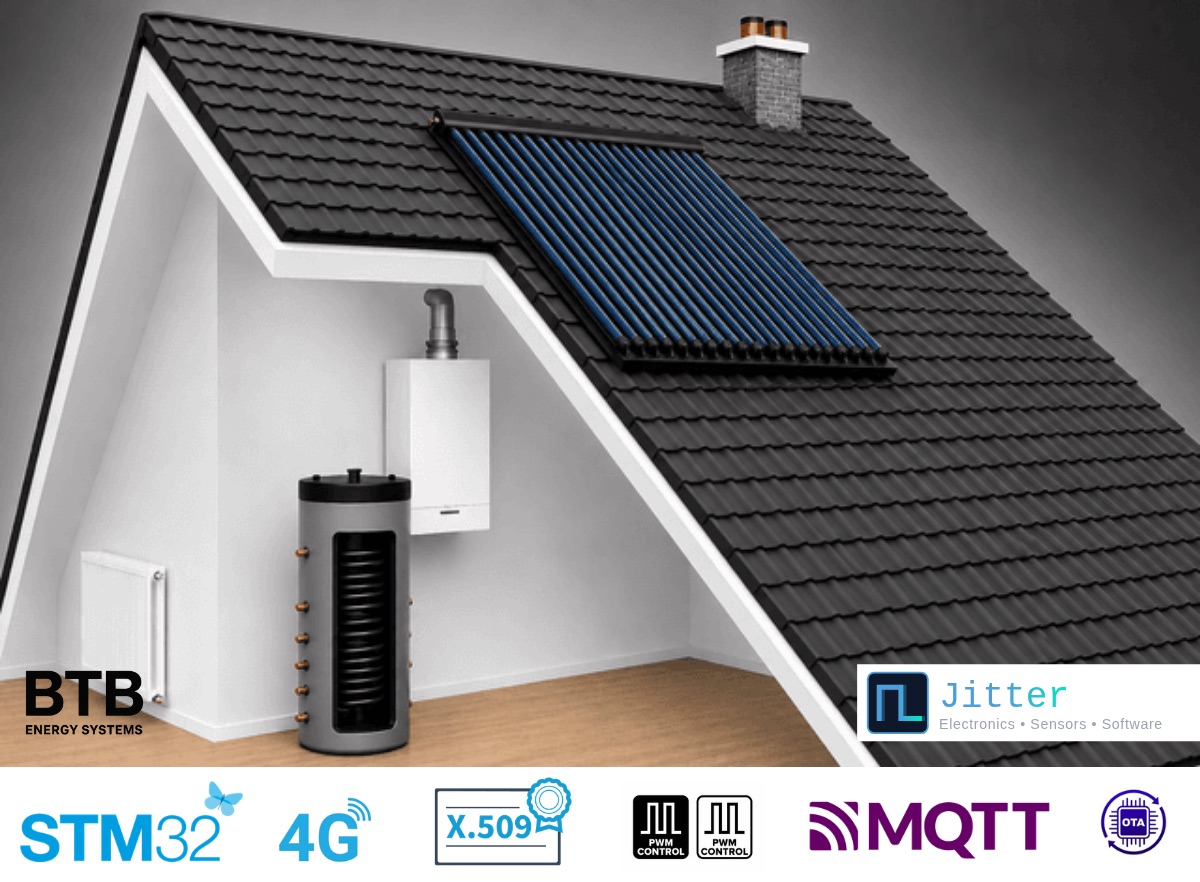
The product: a solar water heater that runs on tap water
BTB Energy Systems develops and sells solar water heaters. Evacuated tube collectors on the roof heat water, which is stored in an insulated buffer tank. A coil heat exchanger passes that heat on to the tap water in the home. Because the sun heats the water directly, the thermal efficiency is much higher than first generating electricity with solar panels.
What sets it apart is that the system runs on ordinary tap water, without antifreeze. The collectors are normally empty and only get filled once they are warm enough. In frost or when overheating, they stay empty. That is better for the environment, gives a higher efficiency and makes maintenance simpler. It also means the controller has to step in at the right moment.
The challenge
The previous controller connected over Wi-Fi. That made BTB Energy dependent on the resident's network: a new password, a different router or a weak signal in the attic, and the system dropped out of sight. The alternative was to ship a separate 4G dongle, which meant extra cost and one more part that can break.
BTB Energy wanted a new, smart controller with:
- Its own 4G connection, independent of the resident's Wi-Fi.
- Remote data: readings and status of every system available in one place, as the basis for their own dashboard and alerts.
- Smarter control: matching the flow rate to the conditions for optimal efficiency.
- A secure infrastructure that meets the new European requirements, such as the Cyber Resilience Act.
All on a tight schedule: we promised 10 weeks for PCB, firmware and server combined.
What we built
A complete embedded product with a cloud backend in 10 weeks is only feasible if you don't start from zero. We combined our proven building blocks for connectivity and security with custom work for what sets the BTB solar water heater apart: the control.
Custom
Controller electronics
A new board with an STM32 microcontroller, temperature sensors and PWM control of the pumps. Designed for series production.
Custom
Control algorithm
Firmware that fills and empties the collectors at the right moment, protects the system against frost and overheating, and optimizes the flow rate for efficiency.
Building block
4G connectivity
An integrated LTE modem with MQTT communication to the server. It needs no Wi-Fi from the resident and no separate dongle.
Building block
Security & updates
Every device authenticates with its own X.509 certificate. Firmware updates go securely over the air, so improvements and security patches reach every installation without a technician.
Building block
Independent server backend
A dedicated server with data broker and database, owned by BTB Energy. It does not depend on a third-party IoT platform and is set up so it can meet the requirements of the Cyber Resilience Act. BTB Energy builds its own dashboard and alerts for installers on top of it.
The schedule: 10 weeks promised, 12 delivered
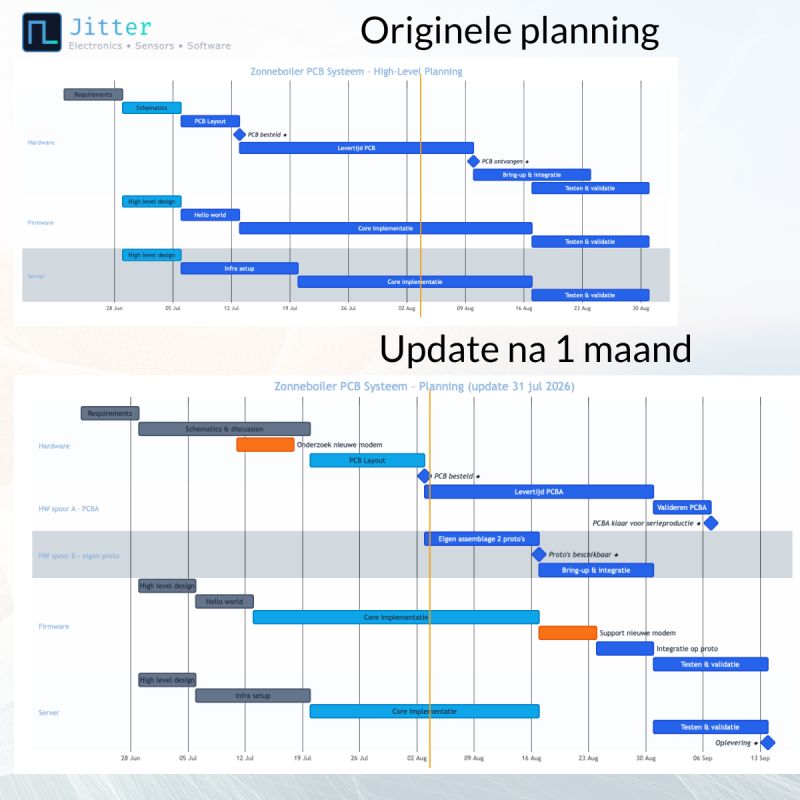
In week 4 we found that the 4G modem we had assumed in the quote had doubled in price in a short time. Formally we could have gone ahead with it, but for a product going into series production that didn't feel right. In consultation with BTB Energy we switched to a modem that is four times cheaper.
That cost a week of research and a week of extra firmware integration. To limit the impact, we added a second track: alongside the order at the PCBA factory, we assembled a few prototypes ourselves. That way the first board was available after two weeks instead of four, while the factory made a small test batch before 100+ units are produced.
Net result: two weeks later than promised, and a permanently lower unit cost for every device BTB Energy produces from now on. We shared the cost of the modem switch. The research also gave us a new building block that we use again in later projects.
Calculate first, then measure
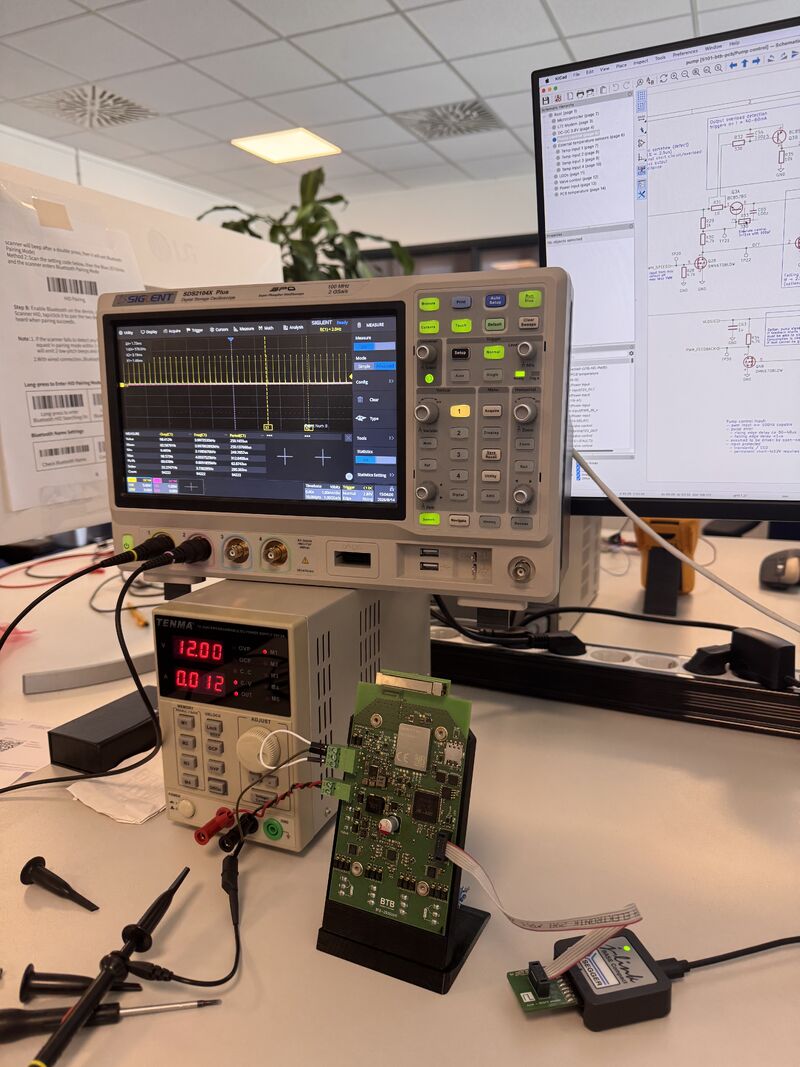
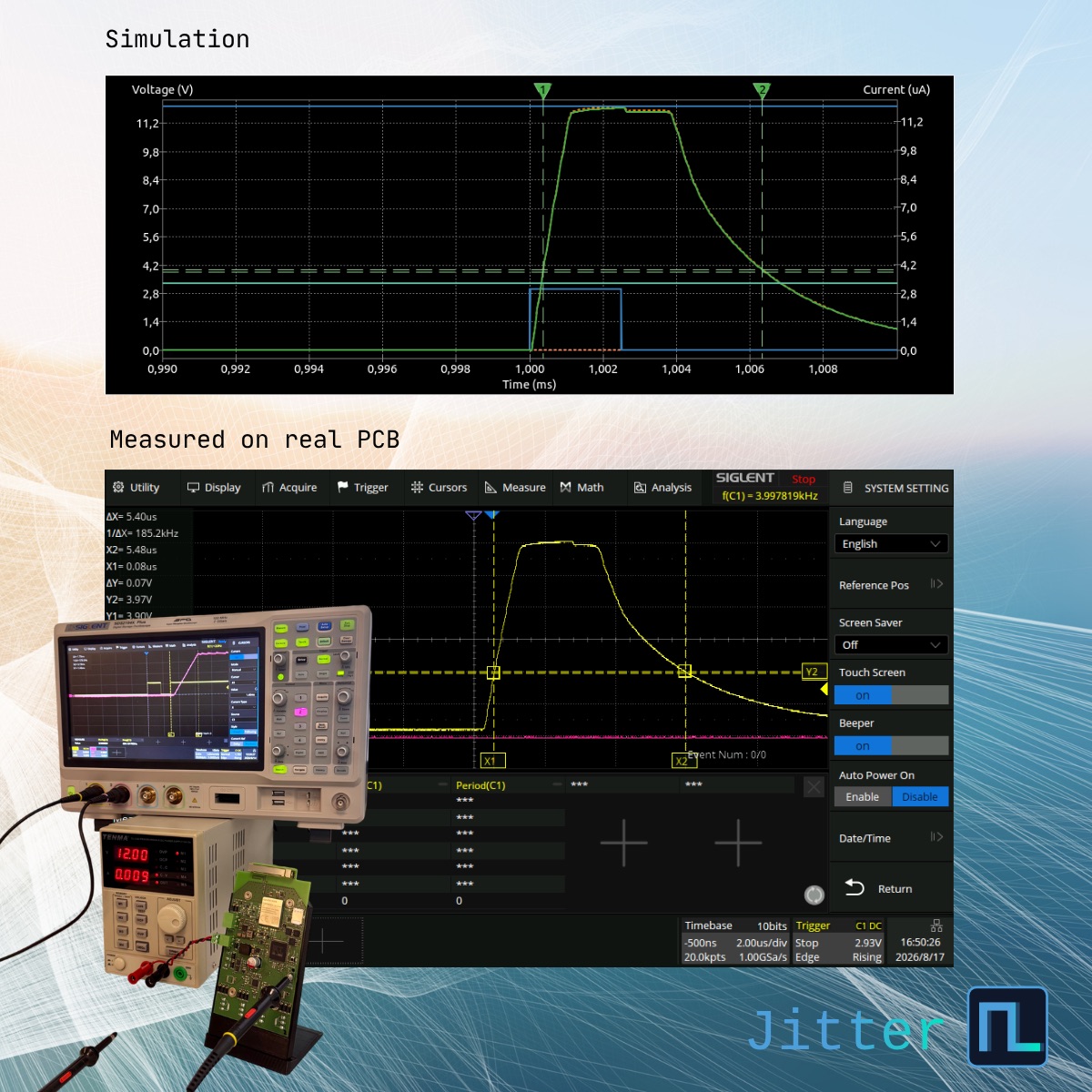
With a new board, we check all functionality and specifications step by step. For every measurement we decide in advance what we expect, from the calculation or from the simulation. If the measurement matches the expectation, we know the design does what it should. If it doesn't, we have found something.
That happened right at the first test. According to the calculation the board should draw 25 mA, and the lab supply was set to exactly that limit. The supply kicked in immediately. There was no short circuit, all voltages were within spec, and by eye everything worked. The cause was a multiplexer with two nearly identical sister parts that share the same function and footprint but have a different pinout. Without that precalculated expectation, this fault would only have shown up much later, in the field.
You can read how we approach this, from test plan to bring-up report, in Board bringup: how we test that your hardware works.
Where are we now?
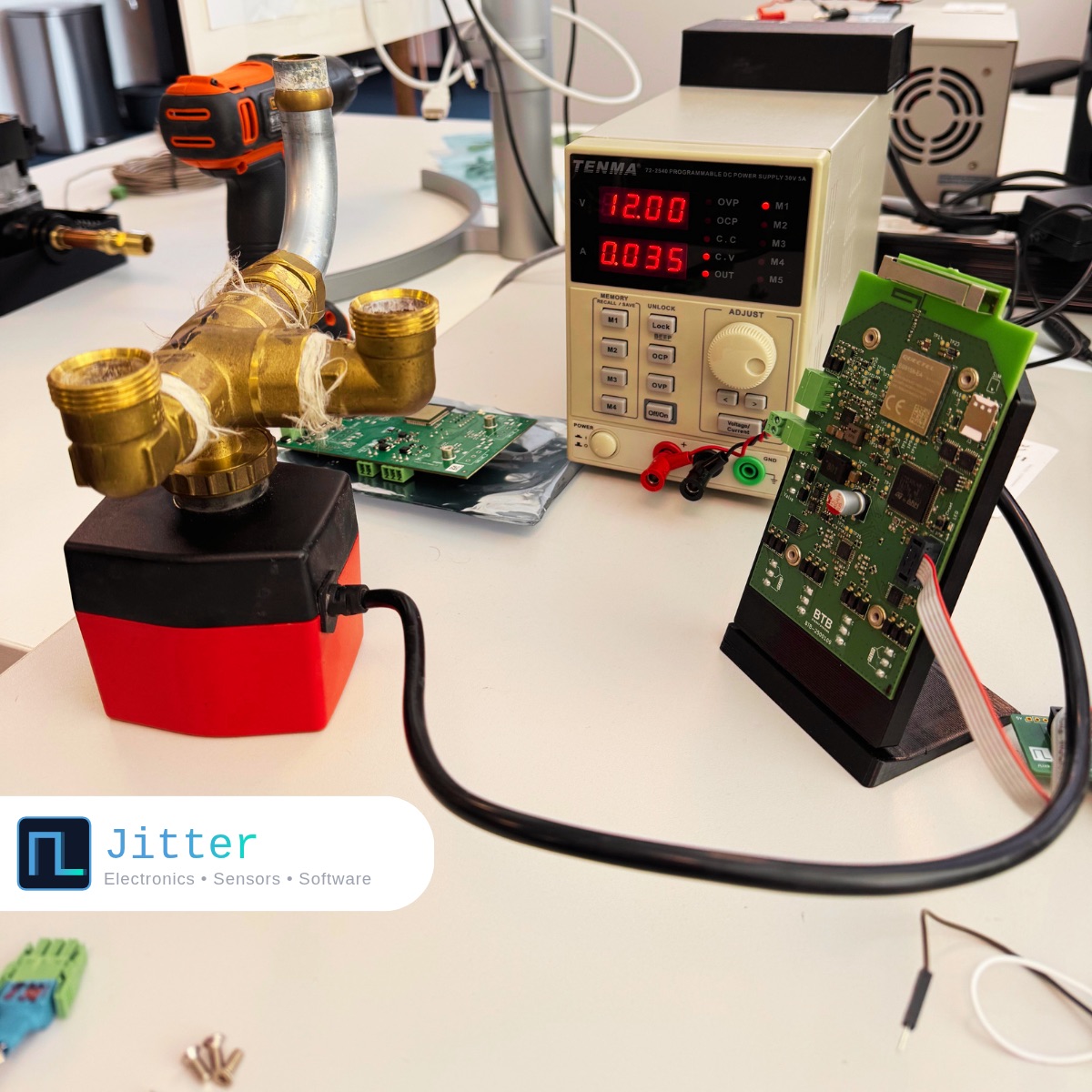
The first controller is installed at BTB Energy and runs in a real solar water heater. We follow the system remotely over the 4G connection, and based on that data we fine-tune the control algorithm together.
What Jitter delivered
- PCB design: controller with an integrated 4G modem, ready for series production
- Embedded firmware: control algorithm, pump control and protection against frost and overheating
- Secure connectivity: MQTT over 4G with an X.509 certificate per device and over-the-air updates
- Server backend: independent infrastructure with data broker and database
- Production: prototypes, test batch and preparation for series production