Modernizing systems and installations

You have a good system that has run well for years, but spare parts are no longer available. The documentation is nowhere to be found. The only person who understands the system is retiring. Sound familiar? You're not the only one.

Industrial systems last for decades, but the world around them changes faster. Customers expect new features, IT wants to connect to the cloud, and meanwhile nobody dares to touch the system in case it breaks.

Replacing everything is rarely realistic: it costs too much, carries too much risk and means too much downtime. Doing nothing isn't an option either.

Sound familiar?

Technical

  • Parts are scarce or unaffordable
  • Adding modern functionality seems impossible or too complex
  • The system simply looks dated

Knowledge

  • The original developers are gone
  • The documentation is no longer accurate
  • The colleague who knows everything is counting down to retirement

Integration

  • No APIs, only outdated protocols
  • Data is locked in proprietary formats
  • Connecting to ERP, MES or the cloud is a project in itself

Competition

  • New competitors arrive with modern solutions
  • Customers expect features you can't deliver
  • Technical debt keeps innovation stuck

Our approach

Step by step, with no big bang

We replace outdated parts with modern alternatives that will last and that fit straight into your existing system. These drop-in replacements work with what you have and make room for what you need next.

Analysis

We start by analyzing and documenting your current system. Where needed, we reverse engineer old protocols to understand them. That way we know exactly what has to happen before we replace anything.

Electronics

We replace outdated circuit boards and modules with our own designs. They have the same size and connectors, perform better and will be available for years again.

Embedded systems

Legacy controllers and processor boards get a modern core that is faster, uses less power and is ready for expansion.

Software

We rewrite proprietary firmware into maintainable, documented code, with room for new features and connections to external systems.

The result is a system that looks the same from the outside and is ready for the next ten years on the inside.

Making existing equipment connected

Read out your equipment remotely without redesigning your whole product

Connect

A module next to your controller

We connect a sensor-link module to your existing controller over Modbus, CAN or a serial link. Your device then sends its status and fault codes over 4G to your own server. Nothing changes in the controller itself.

Replace

A new board with connectivity built in

If the electronics are due for replacement anyway, we design a new version with 4G, security and remote updates built in. It does the same job with the same connections, and from then on you can monitor it remotely.

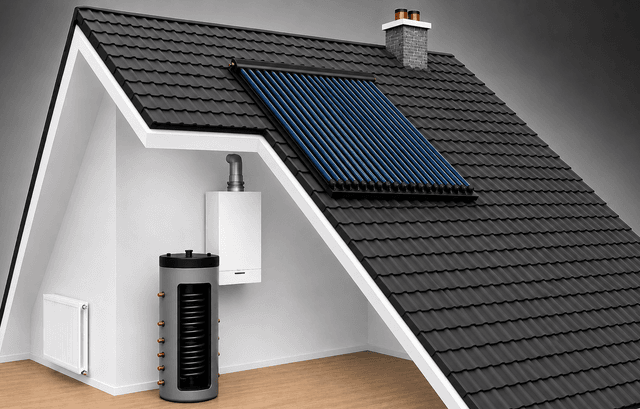
Solar water heater by BTB Energy Systems

Example: BTB Energy

An existing solar water heater moved from Wi-Fi to its own 4G connection

New controller, firmware and server in 12 weeks.

Read the case →

What you get

  • Drop-in replacements that fit your existing system
  • Modern components that will be available for years again
  • Maintainable, documented code
  • Room for new features, integrations and connectivity
  • Minimal downtime thanks to a phased approach

After that, we stay your partner

Modernizing is more than new hardware. It means keeping what works and laying the groundwork for the future. After the modernization we stay on as your technical partner. We document everything so the knowledge doesn't get lost again, and we keep your system up to date. That way you won't be back in the same spot ten years from now.

Related articles

Modernizing a working system: Incremental vs. big bang?

Modernizing a working system: Incremental vs. big bang?

Ingmar Jager
Ingmar Jager
February 12, 2026

Replacing everything at once sounds like the fastest route, but incremental modernization is almost always the better strategy. Why? You're always working from a functioning whole and can test and adjust much sooner.

Engineering
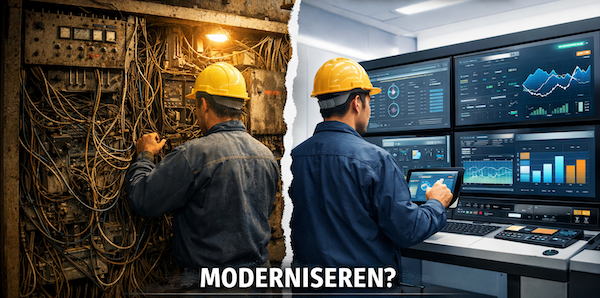
Modernizing existing systems

Modernizing existing systems

Ingmar Jager
Ingmar Jager
February 10, 2026

Building something new from scratch is so much easier than modifying existing systems. But you don't have that luxury when you need to modernize a running system.

Engineering

Frequently asked questions about modernizing

Can I read out existing equipment remotely without redesigning everything?
Yes. We connect a sensor-link module to your existing controller over Modbus, CAN or a serial link. Your equipment then sends its status and fault codes over 4G to your own server. Nothing changes in the controller itself.
A part is no longer available. What now?
We design a replacement board or module with components that will be available for years again. Same size and same connectors, so it fits your existing system. If the electronics are due for replacement anyway, we build in 4G, security and remote updates at the same time.
The documentation is gone, and so are the original developers. Can you still help?
Yes. We start by analyzing and documenting your current system, and where needed we work out old protocols through reverse engineering. We only replace something once we know how it works. Everything we find out gets written down, so the knowledge doesn't get lost again.
Does my installation have to shut down during the modernization?
No. We modernize step by step instead of replacing everything at once, so running installations keep working and downtime stays minimal.
What does modernizing existing equipment cost?
That depends on your system and on what needs replacing. After an intake meeting and, where needed, an analysis of the current system, you get a fixed price per phase. If you want to make existing equipment connected, the budget calculator gives you a first estimate.

Is your system due for modernizing?