


Every measurement means a trip to the site
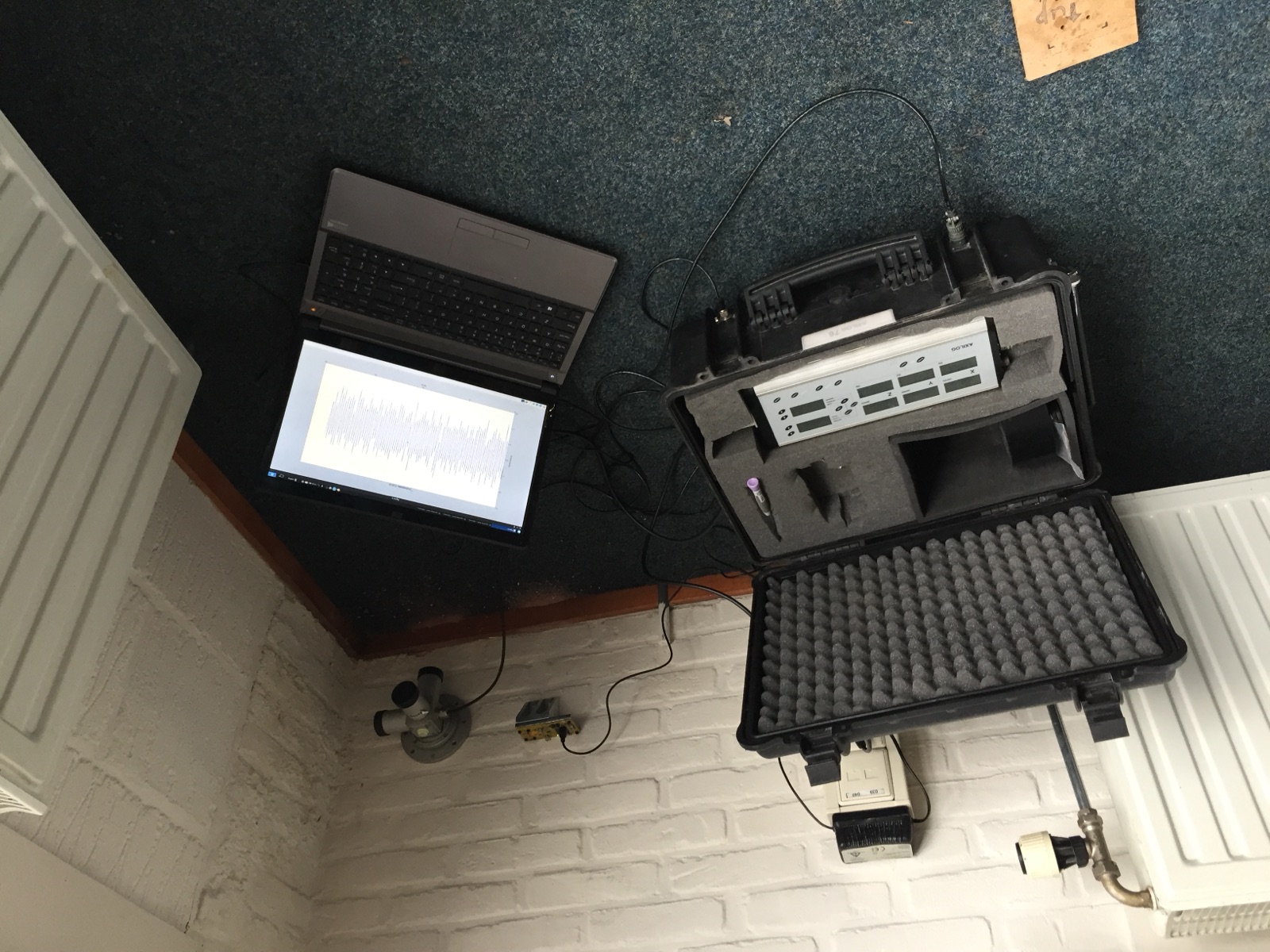
On construction and infrastructure projects, engineering consultancies have to show that vibrations stay within the SBR guidelines. Otherwise pile driving, pulling sheet piles or demolition work can cause serious damage to surrounding buildings.
With traditional measurement equipment, that means a lot of driving. Placing meters, reading out data, swapping batteries, changing a setting because the work has shifted: all of it requires someone to go to the site. And between two visits you can't be sure everything is still measuring.
Frogwatch turns that around. The meter goes on the wall once, and after that almost everything happens from the office.
Everything configurable from the office
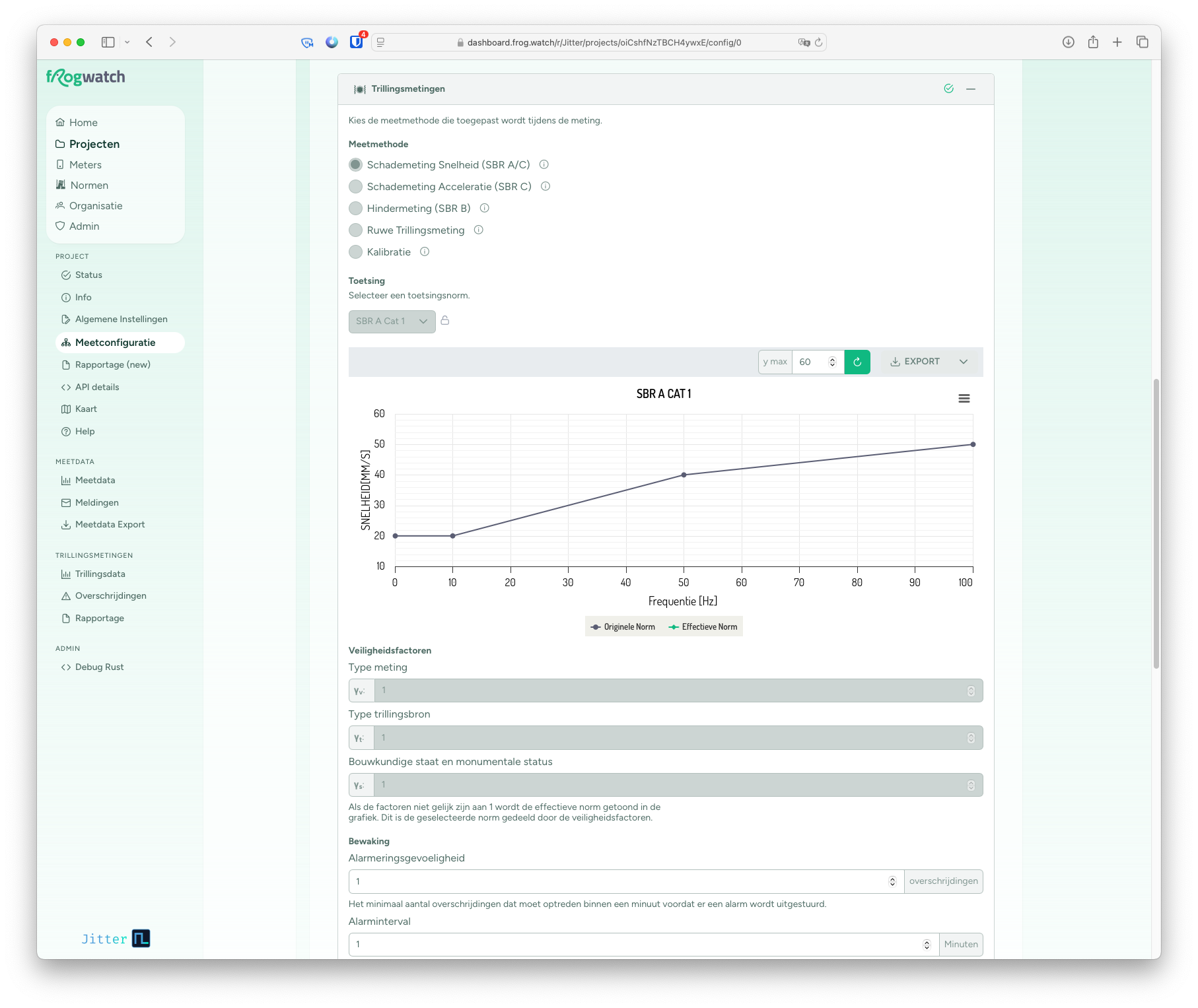
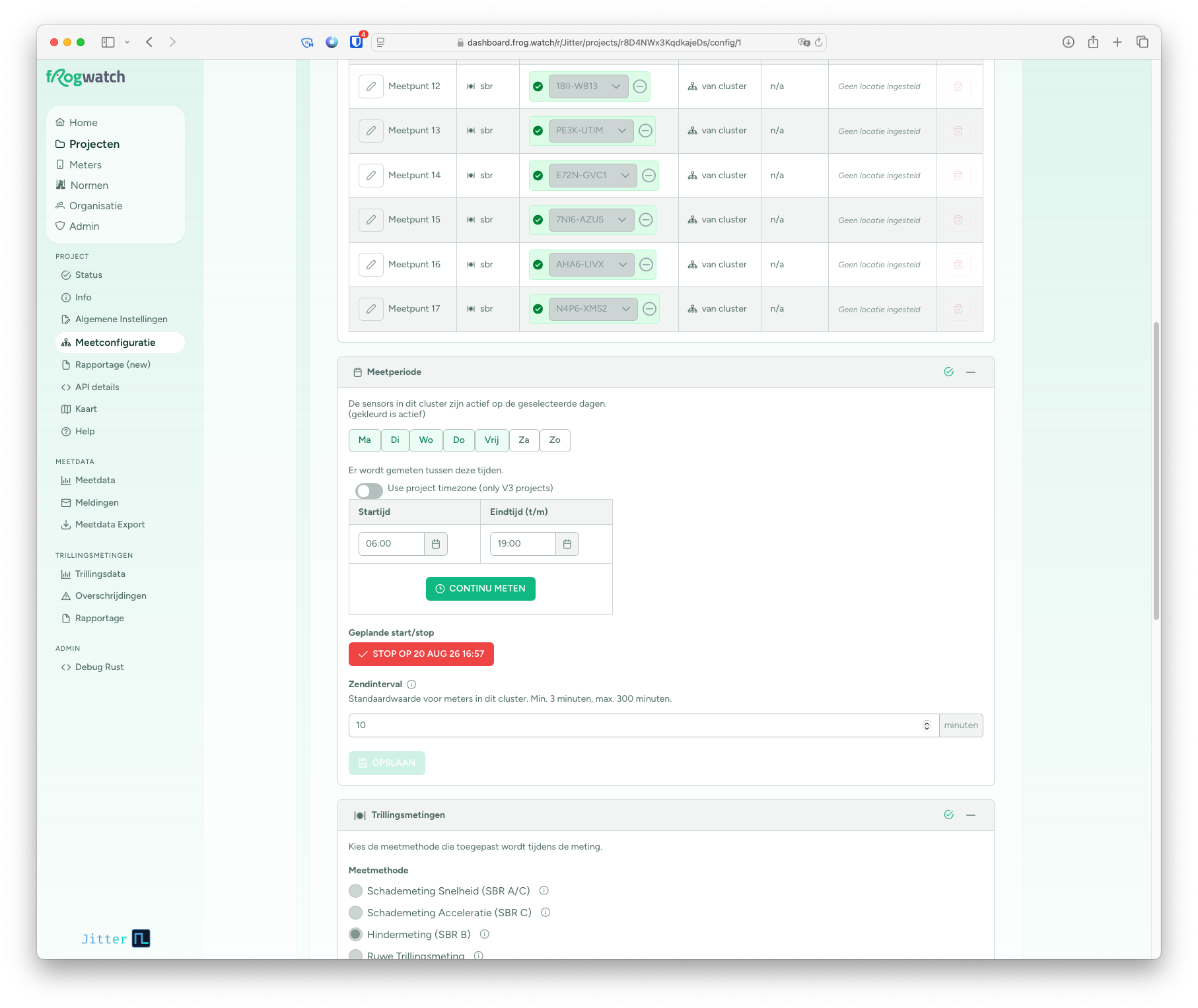
A measurement project changes along the way. The work moves to a new phase, neighbors complain about nuisance, or work stops for a week. The consultant adjusts the meters through the dashboard without getting in the car:
- Measurement method: damage measurement on velocity or acceleration, nuisance measurement or raw vibration data.
- Assessment standard and safety factors: which SBR category the readings are checked against.
- Alerts: how sensitive they are and how often a notification goes out.
- Measurement period: active only on workdays and between set hours, or continuously.
- Scheduled start and stop: the measurement starts and ends automatically on the right date.
- Transmission interval: how often the meter sends its data.
Battery life as a setting
Most trips to the site are for swapping batteries. That is why battery life was one of the main goals for the second generation. The V1 meters lasted 3 to 4 weeks on a battery, the V2 meters 8 to 12 weeks.
Where a meter lands within that range is up to the user. The transmission interval has the most effect: a meter that sends data every fifteen minutes uses more power than one that does so every two hours. The measurement period (daytime only or continuous) makes much less difference. When a reading exceeds the standard, the meter always sends a notification right away, whatever the interval. This way the consultant chooses per project between up-to-date data and fewer visits. Frogwatch explains this in detail here.
Worked example
A 6-month construction project with 5 meters
V1: every 3-4 weeks
~7 trips
V2: every 8-12 weeks
2-3 trips
And every change to the measurement method, standard or measurement hours is now a click in the dashboard instead of a trip.
Updates when it suits the user
New firmware reaches the meters over the mobile network, so nobody has to collect meters or send out a technician. But you don't want to restart a meter in the middle of a measurement campaign. So the user decides when a meter installs the update, for example between two projects.
This keeps hundreds of meters in the field up to date, with new features and security updates, without disrupting a running measurement.
From V1 to V2: where our building blocks came from
The first generation went into the field in 2017, with firmware in C. Based on years of field experience and user feedback, we overhauled the platform from the ground up. The second generation (2024) got a new, more power-efficient electronics design, firmware in Rust, improved connectivity and a more extensive dashboard. We are migrating the server backend to Rust step by step, without disrupting the running platform.
The technology we developed for Frogwatch and proved in the field is the basis of the building blocks we now use for other clients: 4G connectivity, secure communication over MQTT, remote updates and reliable embedded firmware in Rust. What took years of development at Frogwatch is a starting point for a new product.


The V2 meter: a housing milled from a single block of aluminum, designed around the electronics. Drag the sliders to see the layers.
Jitter as technology partner
Jitter developed Frogwatch, and it is now an independent company, Frogwatch B.V. Jitter is a shareholder and the technology partner: the same engineers who designed the first meter are developing the platform today. So we have our own stake in it working, at delivery and for years after.
- Ongoing development: electronics, firmware, server and dashboard, from V1 to V2 and beyond
- Maintenance: firmware updates, security and support for meters in the field
- Operations: keeping the servers and the dashboard running
- Production: assembly and testing of the meters